
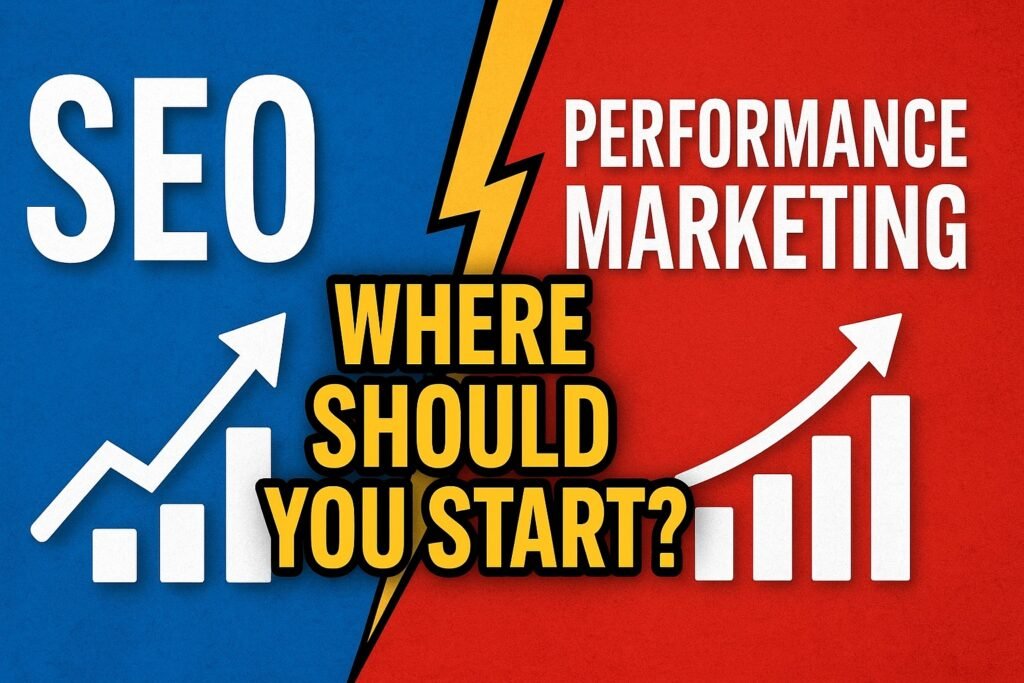
In today’s fast-paced digital landscape, businesses face a critical crossroads: the slow-and-steady climb of organic search or the high-speed lane of paid results. Choosing between SEO vs Performance Marketing isn’t just a budget decision; it’s a strategic one that defines how your brand will scale. At Santric Technologies, we have spent years helping businesses navigate this exact dilemma. We believe that sustainable growth doesn’t come from picking one over the other, but from finding the perfect equilibrium between building long-term authority and driving immediate conversions.
1. Understanding the Core: SEO and Performance Marketing Defined
Before we dive into the balance, let’s define the players.
What is SEO (Search Engine Optimization)?
SEO is the art and science of earning traffic through unpaid, organic search results. It involves technical website optimization, high-quality content creation, and building digital authority (backlinks).
- The Goal: To rank #1 for keywords your customers are searching for.
- The Nature: It is an asset. Like real estate, the more you build it, the more valuable it becomes over time.
What is Performance Marketing?
Performance marketing is a comprehensive term for online marketing and advertising programs where advertisers pay only when a specific action is completed—such as a click (PPC), a lead, or a sale.
- The Goal: Instant visibility and immediate lead generation.
- The Nature: It is a utility. As long as you pay the bill, the lights stay on and the traffic keeps flowing.
2. The Pros and Cons: A Side-by-Side Comparison
To find the right balance, you must understand what each “engine” brings to your business vehicle.
The Power of SEO
- Cost-Effectiveness: While SEO requires an initial investment in content and technical fixes, the “cost per click” eventually drops to zero.
- Compounding ROI: A blog post written today can bring in leads for the next five years.
- Trust and Credibility: Users trust organic results more than “Sponsored” tags. Ranking high naturally signals to the customer that you are a leader in your industry.
The Limits of SEO
- Time: It takes months to see significant movement.
- Algorithm Volatility: Google updates can occasionally shift your rankings overnight.
The Power of Performance Marketing
- Instant Gratification: You can launch a campaign at 9:00 AM and have leads by 10:00 AM.
- Granular Targeting: You can show your ads specifically to people in Indiranagar, Bangalore, aged 30–45, who are interested in “Certified Refurbished Laptops.”
- Predictability: If you spend $1,000 and get 50 leads, you know exactly what it takes to get 100 leads.
The Limits of Performance Marketing
- No “Tail” Visibility: The moment you stop spending, your traffic disappears.
- Ad Fatigue: Costs tend to rise as competition increases, often leading to lower margins over time.
3. SEO vs Performance Marketing: Why You Need Both
Imagine a business that only does Performance Marketing. They are successful today, but their Customer Acquisition Cost (CAC) is rising every year. If a competitor with a bigger budget enters the market, they are in trouble.
Now, imagine a business that only does SEO. They spend six months building content, but during those six months, they have zero sales. They might run out of cash before the organic traffic kicks in.
The Santric Technologies Approach: We recommend using Performance Marketing to fuel the present while using SEO to secure the future.
4. How to Find the Right Balance for Growth
Finding the balance depends on your business stage and your goals.
Phase 1: The Launch (80% Performance / 20% SEO)
When you are new, you need data and cash flow. Use Performance Marketing (Google Ads, Meta Ads) to get people to your site immediately. Use the data from these ads to see which keywords actually convert into sales. Then, give those “winning” keywords to your SEO team to build long-term content around.
Phase 2: The Scaling (50% Performance / 50% SEO)
Once you have steady revenue, start shifting more budget into SEO. Fix your technical errors, optimize your site speed, and build a library of helpful “How-to” guides. This reduces your reliance on paid ads.
Phase 3: The Authority (30% Performance / 70% SEO)
At this stage, your brand should be ranking for most industry terms. You use Performance Marketing only for high-competition keywords, remarketing to old visitors, or launching new products.
5. Integrating the Two for Maximum ROI
The secret to growth is making these two departments talk to each other.
- Remarketing: Use SEO to bring people to your blog for free. If they don’t buy, use a low-cost Performance Marketing “remarketing” ad to show them a discount code on Facebook or Instagram.
- Keyword Intelligence: If a specific keyword is too expensive to bid on in PPC, put your efforts into ranking for it organically via SEO.
- Landing Page Optimization: The “Performance” side of marketing teaches us what headlines make people click. Use those same high-converting headlines in your SEO Meta Titles to improve your organic click-through rate.
6. Common Myths Debunked
- “SEO is Dead”: As long as people ask questions on the internet, SEO will exist. It has simply evolved from “keyword stuffing” to “user intent.”
- “Performance Marketing is too expensive”: It’s only expensive if your conversion rate is low. A well-optimized funnel makes paid ads a profit machine.
In the debate of SEO vs Performance Marketing, the winner is the business owner who realizes they are two sides of the same coin. Performance Marketing provides the agility and speed needed to survive in a competitive market like Bangalore, while SEO provides the stability and authority needed to dominate it.
At Santric Technologies, we don’t believe in one-size-fits-all packages. We look at your business data, your competitors, and your long-term vision to create a customized “Balance Scorecard” that maximizes your ROI.
Ready to find your balance? Don’t let your growth plateau by relying on just one channel. Let’s build a strategy that drives leads today and builds an empire tomorrow.
Contact Us: 080-62177058 OR [Click Here]